

What Key Indicators Should Be Considered First When Selecting Spices?
Spice selection may seem like a procurement task, but it actually affects flavor design, processing stability, and finished-product safety. In the food and beverage industry, focusing solely on unit price often means overlooking differences in origin, flavor profiles, variations in pungency, moisture levels, and risks related to pesticide residues and microorganisms. Truly effective evaluation requires examining raw material performance, process compatibility, and supply continuity together in one framework. This is also an essential step that must be thoroughly completed before spices enter large-scale applications.
First, understand the selection logic as a whole
When many people think of spices, they first think of “aroma” and “pungency.” In actual business operations, however, spices are also raw materials with distinct characteristics related to production regions, processing properties, and quality limits.
Even for the same chili powder, Sichuan pepper, or star anise, differences between batches in volatile oil content, color, moisture content, and cleanliness can affect the stable output of finished dishes and industrial products.
Therefore, spice selection is not merely about choosing a variety. It also involves selecting the production region, processing method, testing standards, and supply capabilities. Once the evaluation sequence is clarified, subsequent sampling, trial production, and mass production will proceed more smoothly.
Origin and variety determine the basic flavor profile
The first layer of difference among spices often comes from their origin and variety. Differences in soil, climate, sunlight, and harvesting periods determine the fullness of the raw material’s aroma, the way its pungency is released, and its overall color.
Take chili peppers as an example: some are suitable for emphasizing an intense initial impact, while others are better at creating a lingering sweetness and aroma; some have a bright color but may not be suitable for prolonged cooking at high temperatures.
Sichuan Xinwang Wanghaijiao Agricultural Products Trading Co., Ltd. has long established a presence in key production regions including Guizhou, Gansu, Ningxia, Shaanxi, Xinjiang, Inner Mongolia, Henan, and Sichuan. This is where its value lies: its direct-procurement network creates clearer profiles of each origin, ensuring that spice selection no longer relies solely on experience but develops into a verifiable flavor matrix.
For raw materials requiring repeat purchases over the long term, stability of origin is generally more important than the performance of a particular sample. An attractive sample does not necessarily mean that the same condition can be maintained throughout the year.
Key points to consider when evaluating origin
- Whether the supplier has a continuous supply from major production regions rather than relying on temporary mixed sourcing.
- The range of variation in aroma and pungency of the same variety across different seasons.
- Whether the raw materials undergo standardized drying, impurity removal, grading, and color sorting.
- Whether the supplier can clearly explain the characteristics of the variety rather than providing only a generic name.
Aroma, pungency, and color should not be evaluated separately
A common misconception in spice applications is to pursue only one particular indicator. For example, focusing solely on pungency can compromise the layers of aroma, while focusing only on color may overlook fading or darkening after exposure to high temperatures.
A more appropriate approach is to evaluate aroma, pungency, color, and oiliness within the same system. The foodservice sector focuses on whether the finished flavor is distinctive, while food processing focuses on whether it can still be reproduced consistently after standardization.
Wanghaijiao has been engaged in chili powder, Hanyuan and Maowen Dahongpao Sichuan pepper, green Sichuan pepper, and various compound seasoning ingredients for many years, developing a relatively mature approach to selection and blending in terms of the combination of “aroma, pungency, color, and oiliness.” This capability is highly important for practical selection, because many requirements are not about finding the “hottest” or “most aromatic” raw material, but rather one that is more suitable for the structure of the current product.
Moisture, cleanliness, and safety indicators have a greater impact on mass production
If flavor determines a product’s upper limit, moisture and safety indicators determine its lower limit in mass production. Excessive moisture in spices can easily cause caking, mold growth, and aroma loss, and can also affect powder flowability.
For seasoning powders, sauces, marinades, and snack-food ingredients, the cleanliness of raw materials should not be overlooked either. Excessive impurities and uncontrolled proportions of seeds and stems can both reduce finished-product consistency.
More importantly, pesticide residues, microorganisms, and foreign-matter control require close attention. Although spices may not be used in large quantities, once they become part of a compound formula, risks can be amplified and transferred to the finished product.
Modern dust-free production workshops, color-sorting equipment, laboratories, and processes for pesticide-residue testing, moisture control, microbiological testing, and metal detection are not merely “bonus points.” They are important signals for determining whether a supplier has the foundation for long-term cooperation.
Several details that are easily overlooked
- Whether the powder fineness is uniform, as this affects mixing efficiency and flavor release.
- Whether the raw materials are at risk of absorbing moisture, which affects storage periods and retest results.
- The numbing aroma of Sichuan pepper products volatilizes relatively quickly, so packaging and handling time must be properly matched.
- When a compound seasoning solution contains multiple spices, stability of individual components does not necessarily mean overall stability.
Different application scenarios require different evaluation priorities
The same spice may be used in hot pot bases, spicy snack strips, braised foods, foodservice dipping sauces, and prepared dishes, but the points of focus are not the same. Different scenarios involve different processing conditions, so the selection criteria must also change accordingly.
For example, chain foodservice businesses place greater emphasis on the ability to reproduce results across outlets, requiring stable aroma, consistent color, and high operational tolerance. Food processing, on the other hand, pays greater attention to batch consistency, powder fineness, heat resistance, and the completeness of testing reports.
For wholesale and channel-based businesses, quality must be considered alongside specification compatibility, packaging methods, and replenishment schedules. If supply cannot keep up, even an excellent sample will be difficult to convert into long-term value.
Extend sample evaluation to supply evaluation
Many selection mistakes do not result from incorrect sample evaluation, but from mistaking sample capability for mass-production capability. Spices may appear to be standardized agricultural products, but in practice they depend heavily on supply organization capabilities.
A reliable supply system generally includes direct procurement from production regions, raw-material grading, stable processing, specification testing, and on-demand customization. If any one of these links is missing, deviations may occur later.
For a company such as Wanghaijiao, which has been deeply involved in Sichuan-style spices for many years, its value lies not only in supplying chili powder or Sichuan pepper, but also in connecting an understanding of traditional flavors with modern standardization. For those who need to develop products over the long term, this ability to bridge the two is often more meaningful than a one-time quotation.
A concise checklist can be established for practical screening
- First clarify the purpose: is the ingredient intended to enhance aroma, increase pungency, add color, or create the main flavor of a compound formulation?
- Then evaluate the sample: smell it, stir-fry it, boil it, and mix it, while observing the changes before and after processing.
- Check the specifications at the same time: moisture, pesticide residues, microorganisms, impurities, particle size, and packaging method.
- Finally verify supply: batch stability, delivery time, customization capabilities, and traceability documentation.
The next step after selection is to establish your own evaluation criteria
There is no absolute optimum among spices; the question is whether a spice is suitable for the current product, process, and channel. After understanding the key indicators, it is more important to turn experience into reusable standards.
You can begin with four areas—sample evaluation forms, minimum specification requirements, application-scenario compatibility records, and supply reviews—to gradually establish a consistent selection process. When evaluating new chili peppers, Sichuan pepper, or compound spices, this prevents decisions from remaining at a purely subjective level.
If you are currently developing a spice solution, consider first listing origin, aroma profile, pungency, moisture, safety, and batch stability on the same checklist, then comparing each item according to the actual application scenario. Accurately evaluating the key indicators will generally provide greater confidence in subsequent flavor development, cost control, and supply coordination.
Send Us a Message
Blended Chili Powder
Carefully blended with expert craftsmanship, adjustable across multiple levels of heat and aroma, with rich flavor layers. Suitable for standardized preparation in various catering and ready-to-eat food applications, it is a signature product for brands.
Product Information: Shelf life: 12 months
Net content:
Household packs: 5g, 10g, 250g, 400g
Foodservice packs: 2500g, 5000g
Easy to use, enhancing aroma and spiciness for various cooking applications.
After the ingredients are prepared, sprinkle in the chili powder while hot and mix thoroughly; it can also be mixed with other powders to make a dipping sauce for fried snacks and other foods.
Mainly used for barbecue, braised foods, fried foods, and more.
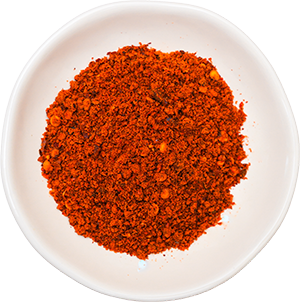
Coarse Chili Powder
Finely ground and free of impurities, with bright, uniform color. It colors and infuses flavor easily, making it suitable for Sichuan stir-frying, braised foods, and deep food processing.
Product Information: Shelf life: 12 months
Net content:
Household packs: 100g, 200g, 400g
Foodservice packs: 10 jin, 20 jin, 50 jin
When stir-frying or braising dishes, add it to the wok to release a red-oil aroma and spicy flavor, then add the ingredients and stir-fry. It enhances the spicy base flavor; avoid excessively high oil temperatures to prevent scorching and bitterness.
For cold vegetable or meat dishes, sprinkle in the chili powder after preparation and mix well; it can also be combined with salt, light soy sauce, and other seasonings to make a dressing.
Place an appropriate amount of chili powder in a container, gradually pour in boiling-hot refined vegetable oil while stirring to release its spicy aroma. After cooling, the resulting red chili oil can be used to season various dishes.
Used for cooking, cold dishes, homemade red chili oil, and more.
Chili Oil
Extracted using traditional methods, with a rich mellow aroma, bright and clear red color, a fragrant and spicy yet non-harsh flavor, and a long-lasting aroma. Ready to use upon opening, it is suitable for seasoning various dishes and for commercial bulk applications.
Product Information: Shelf life: 12 months
Net content:
Household packs: 200 milliliters, 380 milliliters,
Foodservice packs: 10 jin, 25 jin
For cold meat and vegetable dishes, add red chili oil directly and mix with salt, light soy sauce, and other seasonings for enhanced color and aroma.
When stir-frying or braising dishes, add the red chili oil to release its aroma before adding the ingredients. It gives dishes a bright red color and a spicy base flavor; avoid prolonged high-temperature stir-frying to prevent scorching and bitterness.
Add it to the marinade during braising to enhance the spicy base flavor; after the braised food is cooked, mix in red chili oil to brighten and enrich the taste.
Used for hot pot, cold dishes, cooked dishes, and more.

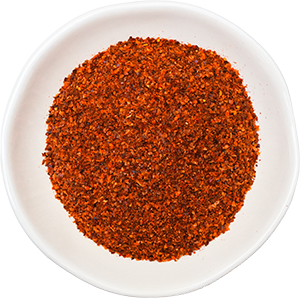
Chili Pepper Pieces
Made from carefully selected high-quality chili peppers, cut into uniform pieces with full dried flesh, little breakage, and good cooking resistance. Mainly used to enhance aroma and spiciness, suitable for stir-frying, dry-pot dishes, and sauce preparation.
Shelf life: 12 months
Net content:
Household packs: 100 g, 200 g, 400 g
Foodservice packs: 10 jin, 25 jin, 50 jin
Add the chili pepper pieces when the oil reaches approximately 60% heat, stir-fry briefly to release their aroma and spiciness, then add the ingredients. Do not cook for too long to avoid scorching and bitterness; suitable for Sichuan stir-fried and braised dishes.
Fry the chili pepper pieces at a moderate oil temperature until slightly crisp to make dry-fried dishes or spicy crisps. Combine with ingredients after frying for a fragrant, spicy and crispy texture; control the oil temperature to prevent darkening.
Add chili pepper pieces when simmering hot-pot or chuan chuan xiang soup bases to release their spicy aroma and color and enhance the flavor of the broth.
Used for hot pot, cooked dishes, stir-frying, high-heat stir-frying, and more.
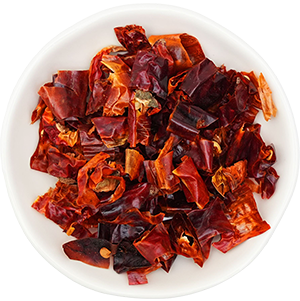
Fine Chili Powder
Finely ground and free of impurities, with bright, uniform color. It colors and infuses flavor easily, making it suitable for Sichuan stir-frying, braised foods, and deep food processing.
Shelf life: 12 months
Net content:
Household packs: 100g, 200g, 400g
Foodservice packs: 10 jin, 20 jin, 50 jin
Its fine texture colors food easily. It can be used as a dry powder seasoning or cooked into red chili oil for use in spicy snack seasoning, allowing the heat to penetrate evenly.
Place the fine chili powder in a heat-resistant container and pour hot oil over it in several batches while stirring to release a fragrant, bright-red chili oil. Allow it to cool before use.
Used for spicy snack strips, homemade red chili oil, and more.
WeChat Channels

Douyin Short Videos