

Origin of the Base
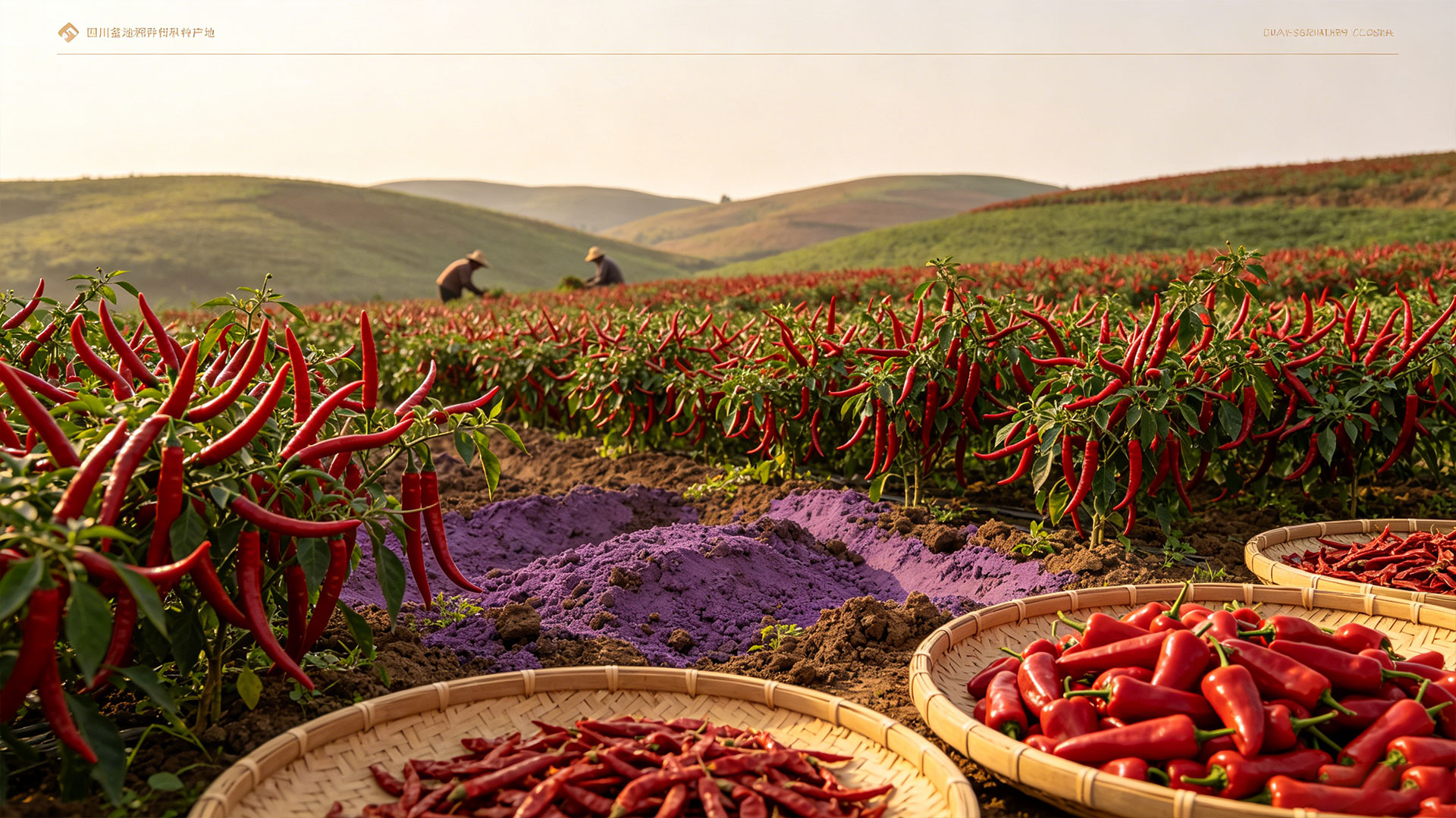
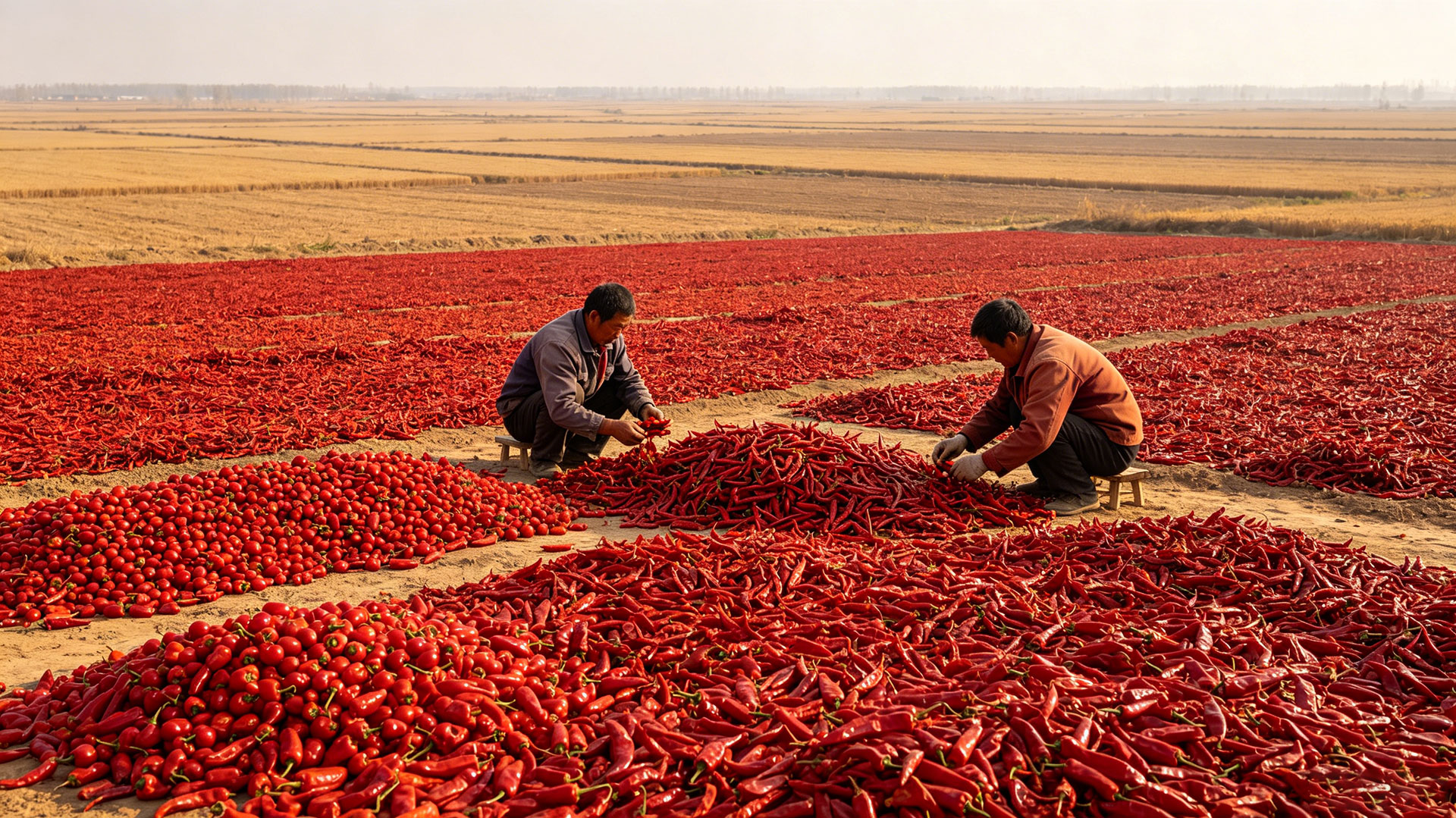
 Sichuan BaseSichuan is located in the mild and fertile Sichuan Basin, blessed with rich purple soil, mild and rainy weather year-round, and gentle, well-balanced sunlight. These ideal conditions nurture two premium core pepper varieties—Mumashan Erjingtiao and Weiyuan Qixing pepper. Erjingtiao peppers are slender and uniform, with thin skin, thick flesh, few seeds, and a naturally oily texture. Their aroma and heat are mild with a lingering sweetness, and they provide excellent coloring results. Qixing peppers have thin skin, bright red color, a rich and mellow aroma, and a long-lasting heat that does not irritate the throat. Peppers at the Sichuan base are carefully hand-picked in batches, naturally shade-dried to preserve their original aroma, and manually sorted throughout the process to remove defective peppers, ensuring authentic Sichuan pepper quality from the source.
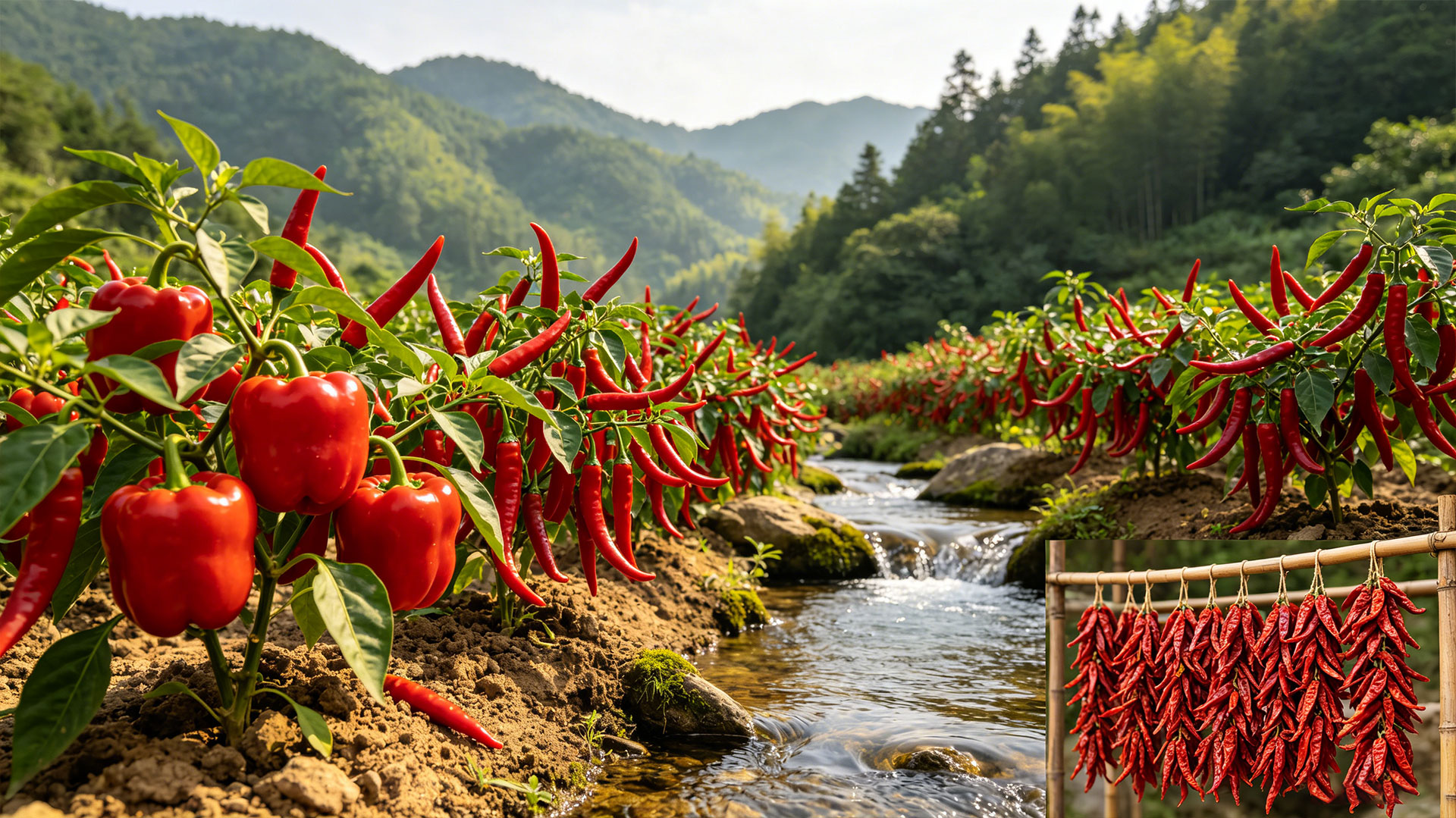
- Guizhou BaseGuizhou is located on the high-altitude, pristine Yunnan-Guizhou Plateau, where mountain forests are isolated from industrial pollution. Clear mountain spring water, slightly acidic sandy soil, and diffused sunlight work together to nurture distinctive peppers with rich layers of flavor. The plump and rounded lantern peppers have thick flesh and a mellow, mildly spicy flavor, making them suitable for preparing ciba chili paste. The slender Erjingtiao peppers deliver a powerful spicy kick and a rich fresh-pepper aroma. Fresh peppers are harvested in batches at different times and dried slowly using the traditional string-hanging method, maximizing the preservation of their original fresh and spicy flavor.
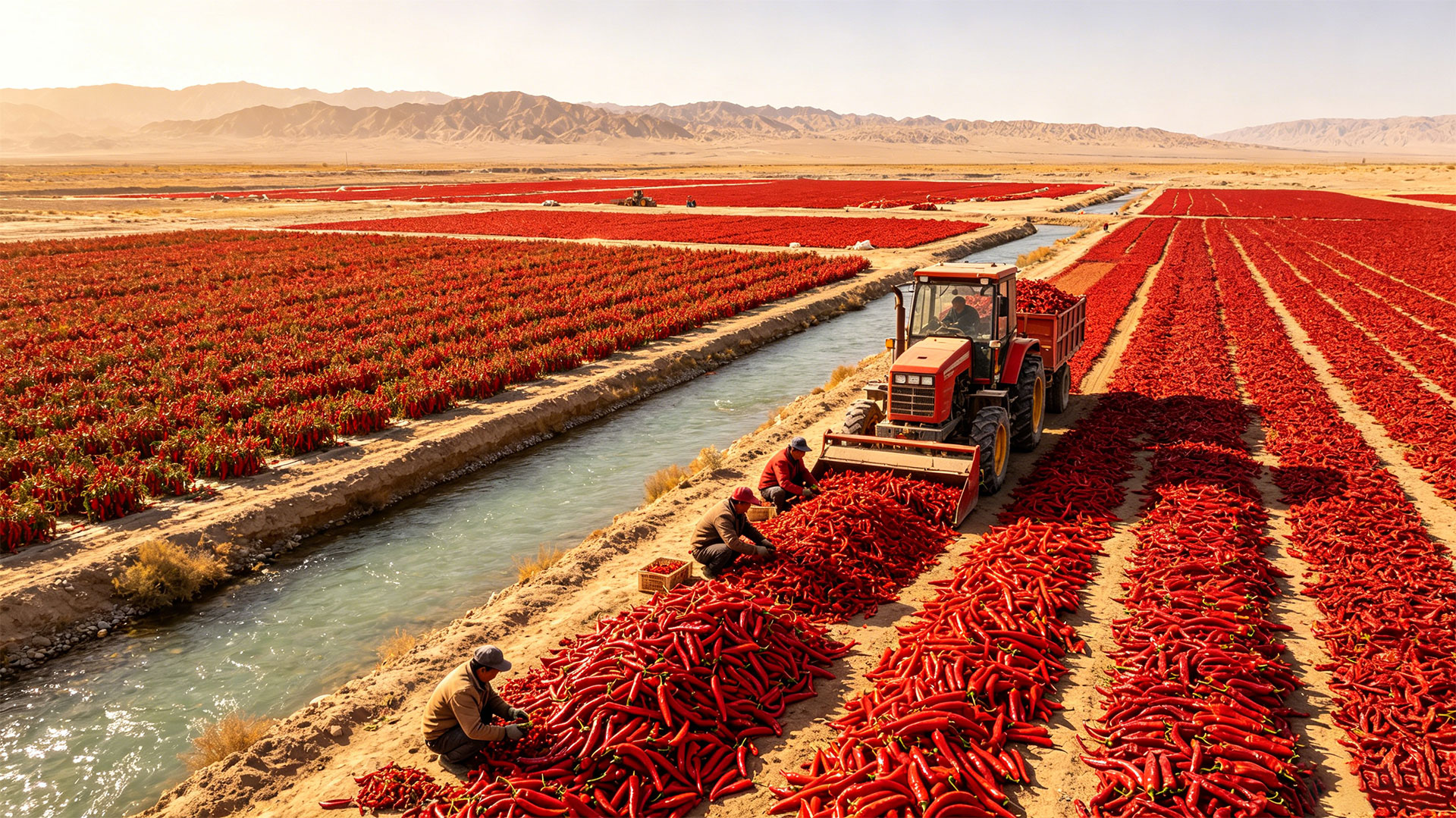
 Gansu BaseGansu spans the Hexi Corridor and the Weihe River Valley, lying within the golden cultivation belt at 38° north latitude. It enjoys exceptionally long sunlight hours throughout the year, substantial day-night temperature differences, and clean soil and irrigation water from tributaries of the Yellow River. The base specializes in two varieties: Gangu Qicun Red and Jinchuan Red Chili. Qicun Red has thick flesh, a rich but non-aggressive aroma, and abundant oil content, making it an excellent choice for chili oil. Hexi long-line peppers have a bright red color and notably high dry-matter and pigment content. The peppers are harvested mechanically across connected fields, naturally sun-dried outdoors in the Gobi Desert, and manually graded and screened at a later stage, resulting in firm, durable dried peppers.
- Ningxia BaseNingxia is home to plains irrigated by diverted Yellow River water. The terrain is flat and open, the alluvial soil of the Yellow River is rich in organic matter, and the cool, dry northwestern climate limits pests and diseases, providing a naturally green cultivation environment. Core varieties include Helan long-line peppers, Pengyang horn peppers, and Jiuyuehong facing-heaven peppers. Long-line peppers have a straight shape, smooth skin, and a crisp, fragrant, spicy flavor when fresh. Horn peppers are plump and thick-fleshed, with a mildly sweet and gentle flavor. Facing-heaven peppers have a strong aroma and moderate heat. Fresh peppers are hand-picked in batches, air-dried outdoors, and processed without sulfur fumigation to preserve their pure original flavor.

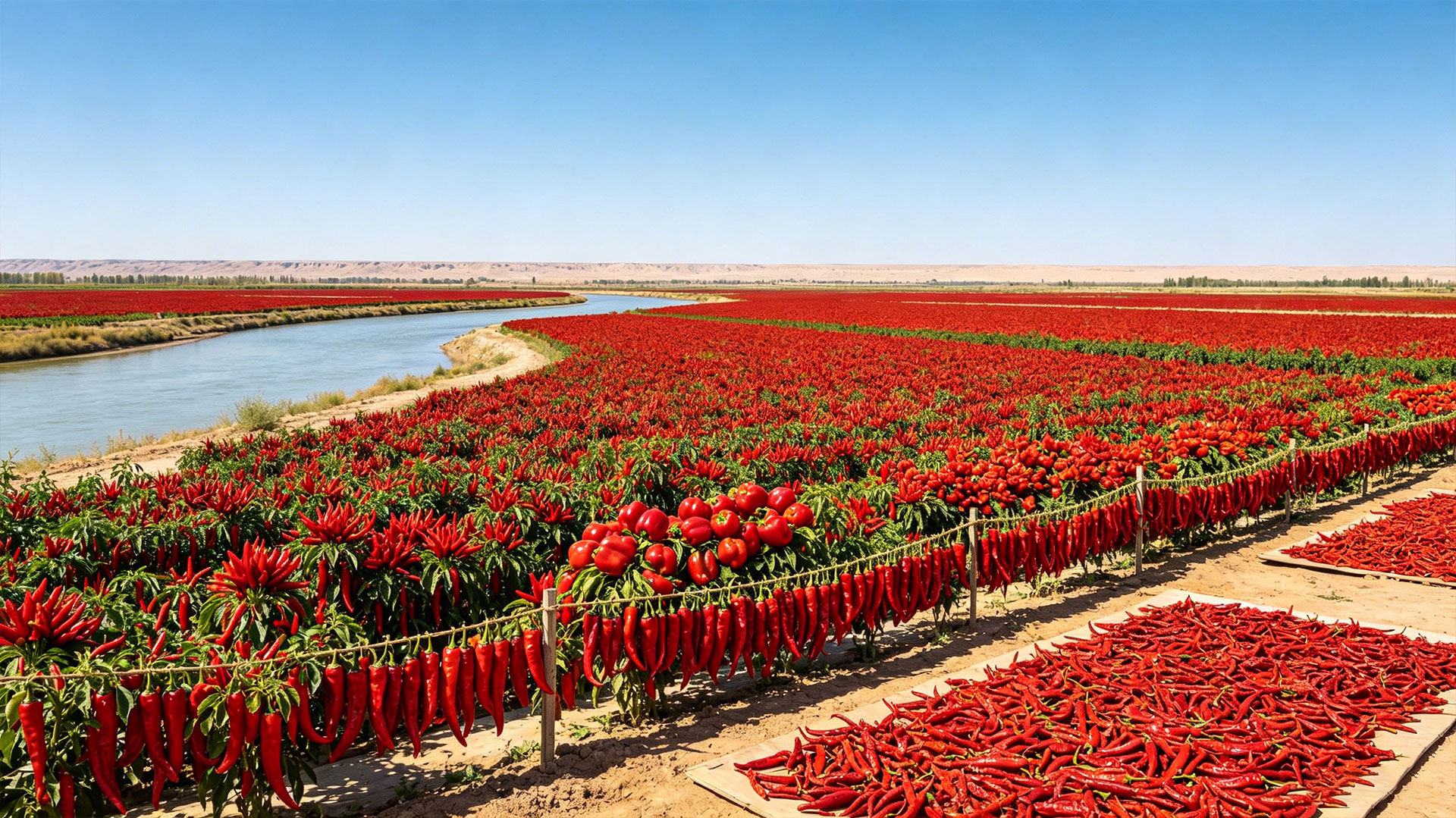
 Shaanxi BaseThe Weibei dryland area of the Guanzhong Plain in Shaanxi receives more than 2,100 hours of sunlight annually. Its deep, loose loess soil and substantial day-night temperature differences promote the accumulation of oils and capsaicin, making it a core production area for authentic Qin peppers. The main varieties are 8819 long-line peppers and Xingping Qicun Red Qin peppers. They are slender and bright red, with evenly wrinkled skin, rich and oily flesh, a mellow and long-lasting pepper aroma, and vivid coloring without darkening. After the peppers reach full natural maturity, the entire plants are harvested together, laid flat in the fields for drying, and carefully hand-selected through multiple stages to remove impurities and green peppers.
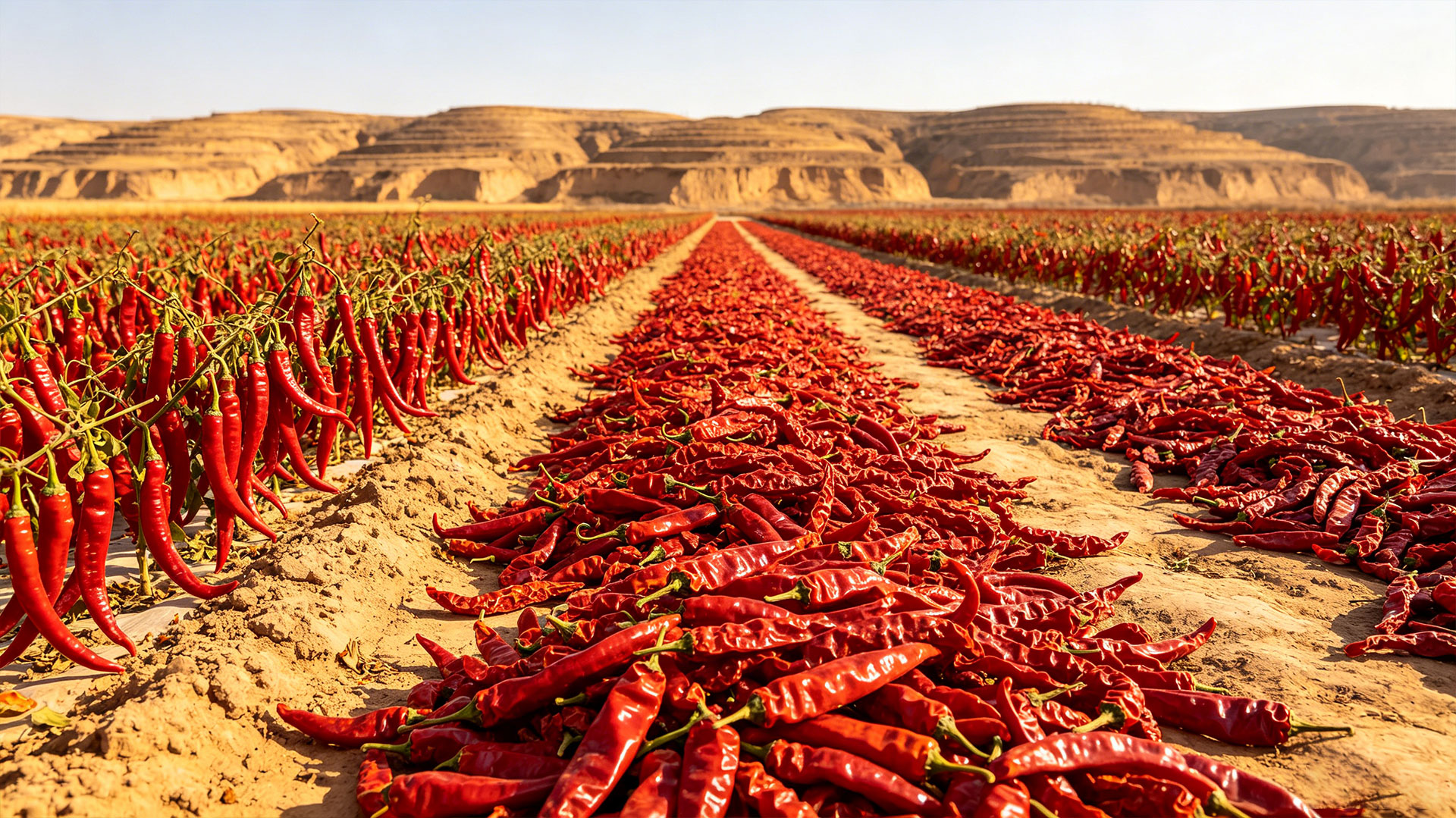
- Xinjiang BaseXinjiang is located in the golden pepper-growing belt at 43° north latitude in northern Xinjiang. The Gobi region enjoys exceptionally long sunlight hours throughout the year, significant day-night temperature differences, and pure, pollution-free snowmelt water. Long-line peppers have exceptionally high red pigment content, bright and translucent skin, and firm, plump flesh. Large-fruited bell peppers have a substantial shape and thick flesh, with a sweet and mildly spicy flavor when eaten fresh. The base uses an integrated process combining manual assistance and mechanical harvesting. After harvesting, the peppers are laid flat and naturally sun-dried in the Gobi sunlight for more than thirty days, followed by centralized mechanical destemming and sorting, ensuring uniform color and stable quality.

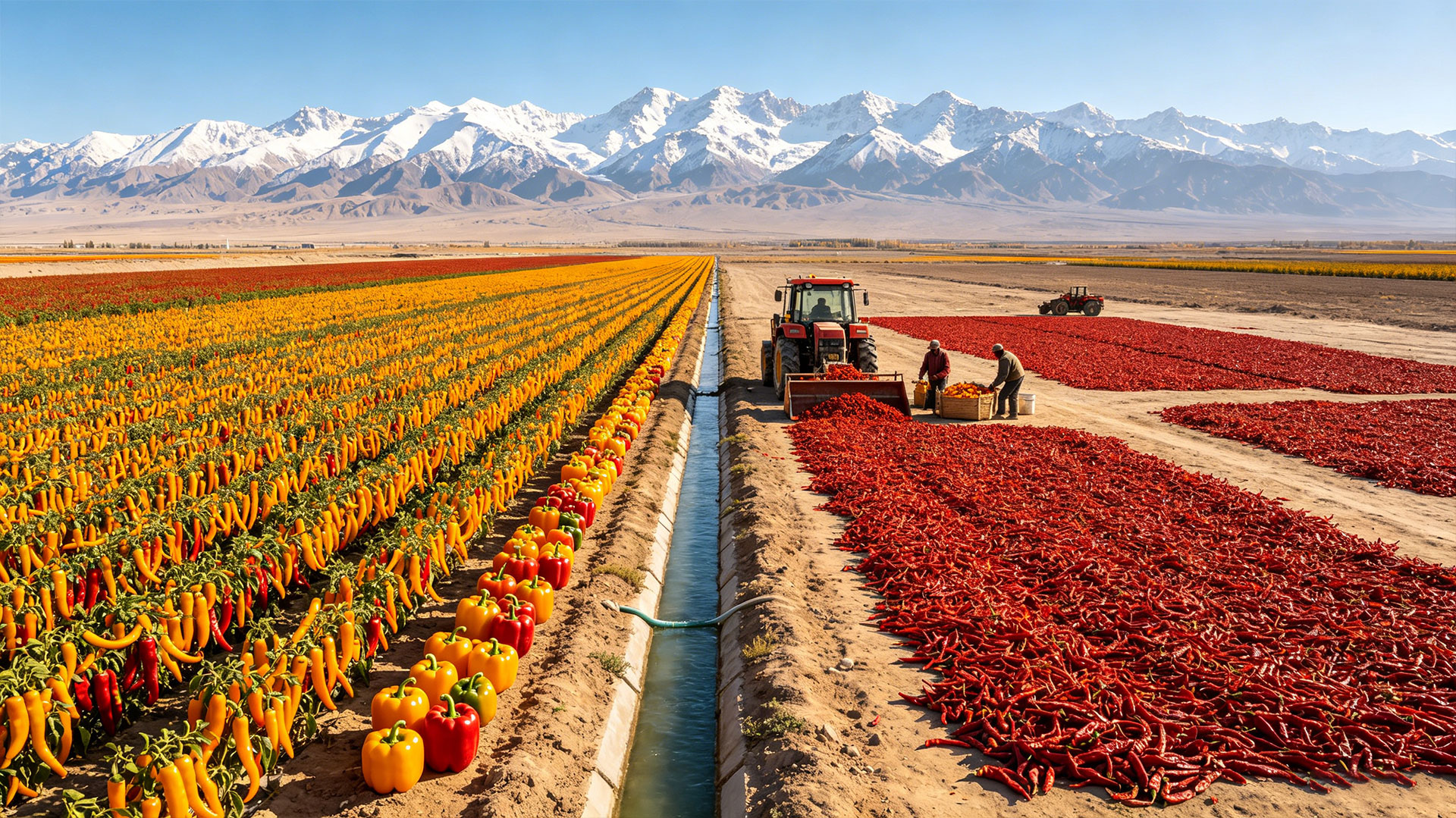
 Inner Mongolia BaseThe Hetao Plain and Kailu production areas of Inner Mongolia are located in a high-latitude cultivation zone in northern China, with abundant sunlight, dry air, pure irrigation water from the Hetao region, and mineral-rich soil. Core varieties include Kailu red dried peppers, Hetao bright peppers, and horn-shaped red peppers. Red dried peppers contain 5%-10% more red pigment than the national average and have a rich, spicy aroma, making them high-quality raw materials for pigment extraction and sauce processing. Horn-shaped red peppers have thick flesh and a regular shape. The peppers are harvested mechanically on a large scale, naturally air-dried outdoors in open fields for an extended period, and sorted and graded through multiple manual stages, producing intact dried peppers without broken skin.
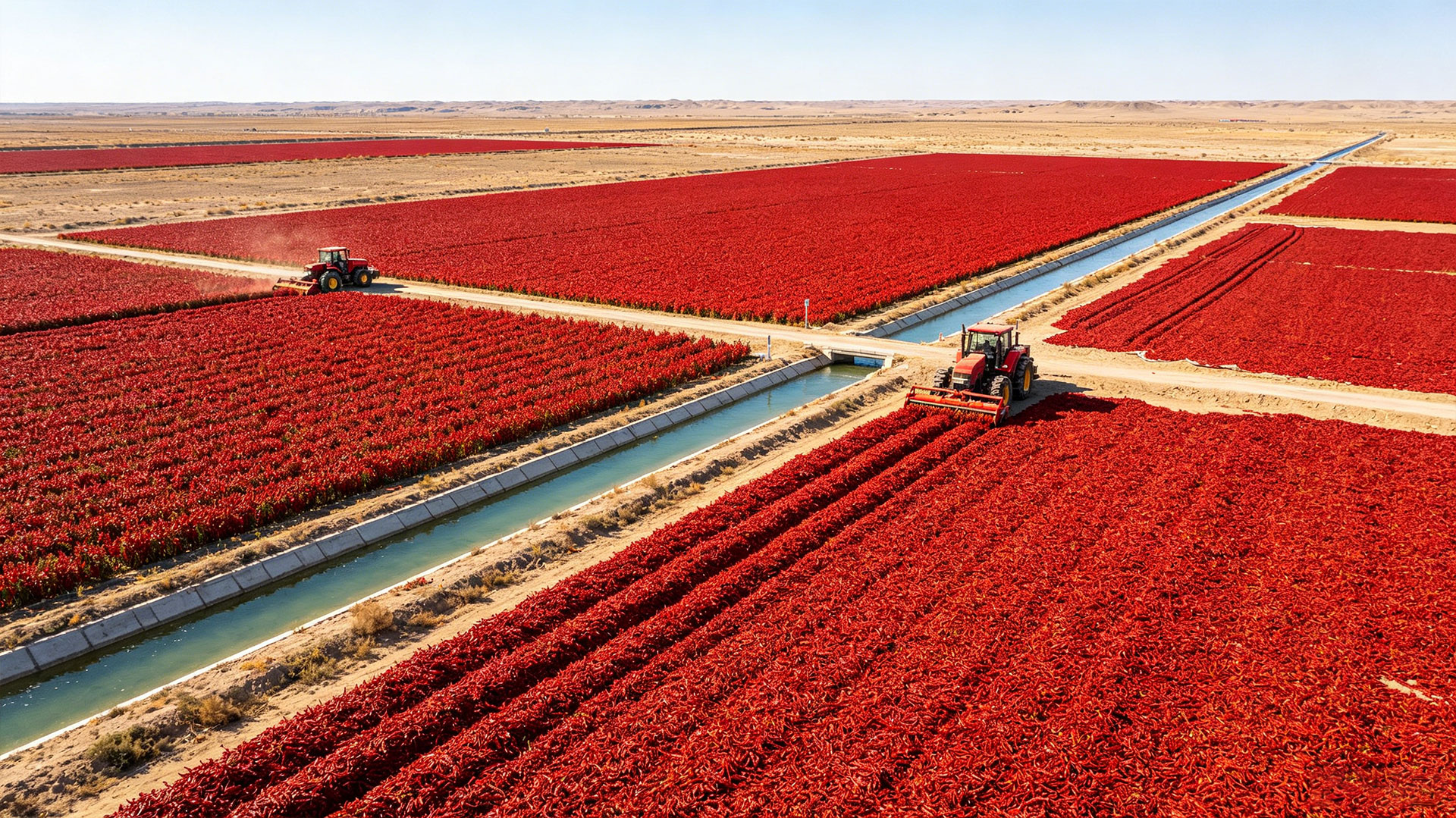
- Henan BaseHenan lies in the central heartland of the Central Plains, where fertile and deep soil covers vast alluvial plains. The region enjoys balanced sunlight across all four seasons and more than 20 million mu of contiguous farmland, making it suitable for large-scale pepper cultivation. Central Plains small peppers are small, rounded, and firm-fleshed, with a clean, refreshing heat. New-generation peppers are high-yielding and plump, with outstanding bright-red color. Peppers are allowed to mature naturally and fully in the fields, then the plants are pulled up together and dried locally. After harvesting and drying, they undergo multiple rounds of meticulous manual selection, with strict control over defective and green peppers to ensure stable color and flavor from the source.

Send Us a Message
Blended Chili Powder
Carefully blended with expert craftsmanship, adjustable across multiple levels of heat and aroma, with rich flavor layers. Suitable for standardized preparation in various catering and ready-to-eat food applications, it is a signature product for brands.
Product Information: Shelf life: 12 months
Net content:
Household packs: 5g, 10g, 250g, 400g
Foodservice packs: 2500g, 5000g
Easy to use, enhancing aroma and spiciness for various cooking applications.
After the ingredients are prepared, sprinkle in the chili powder while hot and mix thoroughly; it can also be mixed with other powders to make a dipping sauce for fried snacks and other foods.
Mainly used for barbecue, braised foods, fried foods, and more.
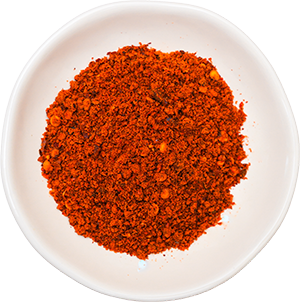
Coarse Chili Powder
Finely ground and free of impurities, with bright, uniform color. It colors and infuses flavor easily, making it suitable for Sichuan stir-frying, braised foods, and deep food processing.
Product Information: Shelf life: 12 months
Net content:
Household packs: 100g, 200g, 400g
Foodservice packs: 10 jin, 20 jin, 50 jin
When stir-frying or braising dishes, add it to the wok to release a red-oil aroma and spicy flavor, then add the ingredients and stir-fry. It enhances the spicy base flavor; avoid excessively high oil temperatures to prevent scorching and bitterness.
For cold vegetable or meat dishes, sprinkle in the chili powder after preparation and mix well; it can also be combined with salt, light soy sauce, and other seasonings to make a dressing.
Place an appropriate amount of chili powder in a container, gradually pour in boiling-hot refined vegetable oil while stirring to release its spicy aroma. After cooling, the resulting red chili oil can be used to season various dishes.
Used for cooking, cold dishes, homemade red chili oil, and more.
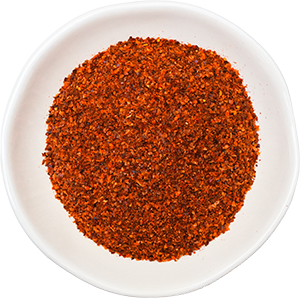
Chili Oil
Extracted using traditional methods, with a rich mellow aroma, bright and clear red color, a fragrant and spicy yet non-harsh flavor, and a long-lasting aroma. Ready to use upon opening, it is suitable for seasoning various dishes and for commercial bulk applications.
Product Information: Shelf life: 12 months
Net content:
Household packs: 200 milliliters, 380 milliliters,
Foodservice packs: 10 jin, 25 jin
For cold meat and vegetable dishes, add red chili oil directly and mix with salt, light soy sauce, and other seasonings for enhanced color and aroma.
When stir-frying or braising dishes, add the red chili oil to release its aroma before adding the ingredients. It gives dishes a bright red color and a spicy base flavor; avoid prolonged high-temperature stir-frying to prevent scorching and bitterness.
Add it to the marinade during braising to enhance the spicy base flavor; after the braised food is cooked, mix in red chili oil to brighten and enrich the taste.
Used for hot pot, cold dishes, cooked dishes, and more.
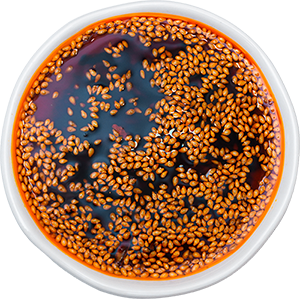
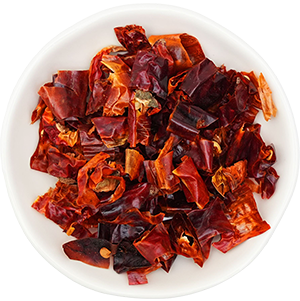
Chili Pepper Pieces
Made from carefully selected high-quality chili peppers, cut into uniform pieces with full dried flesh, little breakage, and good cooking resistance. Mainly used to enhance aroma and spiciness, suitable for stir-frying, dry-pot dishes, and sauce preparation.
Shelf life: 12 months
Net content:
Household packs: 100 g, 200 g, 400 g
Foodservice packs: 10 jin, 25 jin, 50 jin
Add the chili pepper pieces when the oil reaches approximately 60% heat, stir-fry briefly to release their aroma and spiciness, then add the ingredients. Do not cook for too long to avoid scorching and bitterness; suitable for Sichuan stir-fried and braised dishes.
Fry the chili pepper pieces at a moderate oil temperature until slightly crisp to make dry-fried dishes or spicy crisps. Combine with ingredients after frying for a fragrant, spicy and crispy texture; control the oil temperature to prevent darkening.
Add chili pepper pieces when simmering hot-pot or chuan chuan xiang soup bases to release their spicy aroma and color and enhance the flavor of the broth.
Used for hot pot, cooked dishes, stir-frying, high-heat stir-frying, and more.
Fine Chili Powder
Finely ground and free of impurities, with bright, uniform color. It colors and infuses flavor easily, making it suitable for Sichuan stir-frying, braised foods, and deep food processing.
Shelf life: 12 months
Net content:
Household packs: 100g, 200g, 400g
Foodservice packs: 10 jin, 20 jin, 50 jin
Its fine texture colors food easily. It can be used as a dry powder seasoning or cooked into red chili oil for use in spicy snack seasoning, allowing the heat to penetrate evenly.
Place the fine chili powder in a heat-resistant container and pour hot oil over it in several batches while stirring to release a fragrant, bright-red chili oil. Allow it to cool before use.
Used for spicy snack strips, homemade red chili oil, and more.
WeChat Channels

Douyin Short Videos