

What needs to be confirmed before cooperating with a contract manufacturer for compound seasonings
What basic conditions should be examined first in compound seasoning contract manufacturing cooperation?
When launching a contract manufacturing partnership for compound seasonings, many issues may appear to be about price on the surface, but the factors that truly determine the outcome are the supply chain, quality control, formula management, and delivery schedule.
If the details are not fully confirmed at the early stage, common problems later include unstable flavor, batch-to-batch variations, repeated sampling, and even disruption to the product launch schedule.
In the food and beverage sector, compound seasonings are expected to offer more than just good taste. They must also be safe, stable, reproducible, and capable of supporting long-term volume production.
This is especially true for Sichuan-style products, where spiciness, aroma, color, and aftertaste are highly sensitive. Key conditions therefore need to be discussed thoroughly before starting contract manufacturing cooperation.
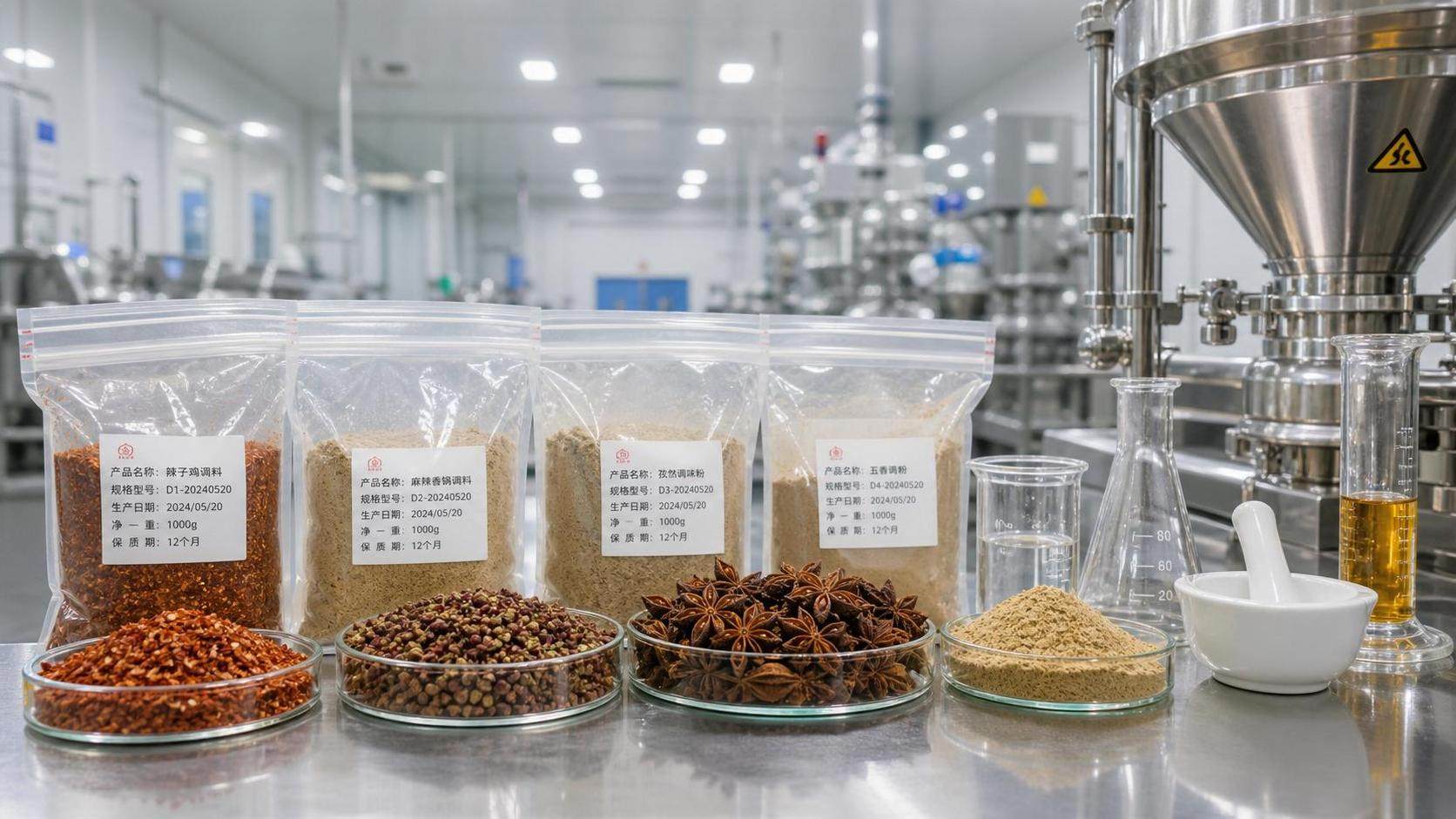
For example, Sichuan Xinwang Wanghaijiao Agricultural Products Trading Co., Ltd., located in Deyang, Sichuan, has been deeply engaged in spices and compound seasonings for many years. With a direct procurement network covering multiple production areas, as well as a dust-free workshop, laboratory, and multi-category supporting capabilities, a company with this background can often help move cooperation into an actionable stage more quickly.
Why should compound seasoning contract manufacturing not be evaluated by quotation alone?
Many partnerships begin with discussions about unit prices, but compound seasonings are not standardized components. Raw material composition, processing methods, and flavor targets all affect the final cost.
For the same spicy compound seasoning, using different chili varieties, Sichuan pepper grades, and spice ratios can result in significant price differences, while the flavor profile may also be completely different.
More commonly, a low quotation may exclude inspection, material loss, packaging adaptation, and small-batch trial production costs, which are then recovered later through additional charges.
What is truly worth comparing is not only the quotation, but whether the proposed solution can ensure long-term supply while maintaining stable quality.
If the partner has an established raw material network covering chili-growing areas in Guizhou, Gansu, Ningxia, Shaanxi, Xinjiang, Inner Mongolia, Henan, and Sichuan, compound seasonings are generally more likely to remain stable during periods of raw material fluctuations.
When reviewing a quotation, it is advisable to check these items as well
- Whether the raw material grades are clearly specified, especially the sources of chilies, Sichuan pepper, and spices.
- Whether sampling fees, trial production fees, and packaging changeover fees are listed separately.
- Who is responsible for testing and whether the ex-factory standards are clearly defined.
- Whether the minimum order quantity and delivery period corresponding to the price are compatible.
What should be confirmed before cooperation to avoid rework midway through the project?
The biggest concern in compound seasoning contract manufacturing is that the initial requirements are described too vaguely. Samples may then be revised repeatedly without ever meeting the actual target.
In simple terms, the more detailed the preliminary confirmation, the smoother the subsequent progress. At a minimum, the flavor target, application scenario, cost range, and packaging format should be explained clearly from the outset.
For example, even when producing Sichuan-style compound seasonings, the formulation logic differs depending on whether the product is used for hot pot dipping sauce, seasoning powder for snack foods, or meat product marinades.
Some applications place greater emphasis on aroma release, some focus more on color adhesion, while others need to balance high-temperature resistance with stability during large-scale processing.
In practical applications, this table is more meaningful than simply asking whether the product can be made, because it directly affects whether the compound seasoning can enter stable mass production.
How can formula confidentiality and quality control capabilities be assessed to determine whether they are more than just verbal promises?
Many people ask what is most difficult to verify in compound seasoning contract manufacturing. The answer is often not the equipment, but formula confidentiality and actual quality control.
If formula confidentiality remains only a verbal promise, the risks will increase as the scale of cooperation grows. A more reliable approach is to check whether there are clearly defined access controls, sample circulation records, and document control procedures.
Quality control cannot be judged solely by statements such as “strictly controlled.” Compound seasonings are relatively sensitive to raw material cleanliness, moisture, microorganisms, and metallic foreign matter. The clearer the testing checkpoints, the more confidence can be achieved later.
Take spices and chili products as examples. If the contract manufacturer is equipped with color-sorting equipment and a standardized laboratory and carries out pesticide residue testing, moisture control, microbiological testing, and metal detection, quality stability is generally easier to verify.
For long-established companies such as “Wanghaijiao,” which have been operating chili powder, Sichuan pepper, and various spices for many years, the advantage lies in their greater sensitivity to raw material flavor and batch differences. When producing compound seasonings, they are less likely to focus only on formulation figures while overlooking actual flavor deviations.
These details can be further checked when assessing reliability
- Whether consistent sample-retention procedures are followed during the sampling, trial production, and mass production stages.
- Whether changes to key raw materials are communicated and the flavor is reverified at the same time.
- Who has access to formulation documents and whether access is managed by permission levels.
- How long it takes to trace an abnormal batch back to the raw materials and production processes.
Why is delivery capability more important than expected for compound seasonings?
Many companies focus only on whether the samples are satisfactory before cooperation, while overlooking delivery capability after mass production begins. Successful sampling does not necessarily mean stable delivery.
The real test for compound seasonings is whether raw materials can be replenished in time after production volumes increase, whether the production schedule will be displaced by other orders, and whether packaging changeovers can proceed smoothly.
If a partner has both a mature spice procurement network and the ability to coordinate supply across multiple product categories, it is generally easier to reduce the risks of stockouts and delays during peak seasons.
This is why one-stop spice procurement capabilities can affect the progress of a compound seasoning project. Once chilies, Sichuan pepper, star anise, cinnamon, bay leaves, fennel, and other raw materials require separate coordination, progress can easily become difficult to control.
Especially during e-commerce promotions, peak catering seasons, or concentrated launches of new products, insufficient delivery capability is often more troublesome than a relatively high price.
When assessing delivery, do not rely only on “it can be done”
The items that need to be confirmed in advance include the normal lead time, whether there is a contingency plan for urgent replenishment orders, whether the minimum order quantity and safety stock are reasonable, and who prepares the packaging materials.
If these checkpoints are not clearly defined, compound seasoning projects can easily become stalled later by seemingly minor execution details.
Which misunderstandings are most likely to cause contract manufacturing cooperation to lose control?
A common misunderstanding is to treat compound seasonings as something that can be made simply by “mixing ingredients.” In reality, flavor design is only the beginning; the real challenge is achieving consistent reproduction.
Another misunderstanding is placing excessive emphasis on finalizing the formula after a single sampling round. Compound seasonings usually need to be fine-tuned according to the end-use cooking method, storage conditions, and packaging format. Reasonable trial sampling can instead reduce later rework.
Another situation is focusing only on a single premium raw material while ignoring overall compatibility. High-quality chilies do not necessarily mean that the compound seasoning is mature; aroma layering, cleanliness of aftertaste, and taste balance are all critical.
A more reliable approach is to manage compound seasonings as a complete project rather than as a simple one-time purchase. This makes risks easier to identify and the schedule easier to control.
How should the final decision be made, and what step should be reserved before cooperation?
If the project has entered the partner-selection stage, consider breaking the compound seasoning contract manufacturing cooperation into several verifiable actions: first define the application scenario, then confirm the sampling process, and finally verify the testing, confidentiality, and delivery terms.
For Sichuan-style projects, partners with long-term brand development, a direct raw material procurement network, and standardized processing capabilities are generally better positioned to balance flavor expression with batch stability.
The experience of Sichuan Xinwang Wanghaijiao Agricultural Products Trading Co., Ltd. in chilies, Sichuan pepper, and various spices provides a reference for evaluating compound seasoning cooperation: both an understanding of traditional flavors and the ability to keep up with modern quality control and delivery requirements should be considered.
A compound seasoning partnership truly worth pursuing is not one in which the sample is impressive for a short time, but one that can maintain a long-term balance among cost, quality, and schedule.
Before formally confirming the cooperation, the raw material sources, formula confidentiality, testing standards, minimum order quantity, delivery schedule, and handling procedures for abnormalities can be listed and clarified one by one. This will make subsequent decisions more reliable than evaluating the price alone.
Send Us a Message
Blended Chili Powder
Carefully blended with expert craftsmanship, adjustable across multiple levels of heat and aroma, with rich flavor layers. Suitable for standardized preparation in various catering and ready-to-eat food applications, it is a signature product for brands.
Product Information: Shelf life: 12 months
Net content:
Household packs: 5g, 10g, 250g, 400g
Foodservice packs: 2500g, 5000g
Easy to use, enhancing aroma and spiciness for various cooking applications.
After the ingredients are prepared, sprinkle in the chili powder while hot and mix thoroughly; it can also be mixed with other powders to make a dipping sauce for fried snacks and other foods.
Mainly used for barbecue, braised foods, fried foods, and more.
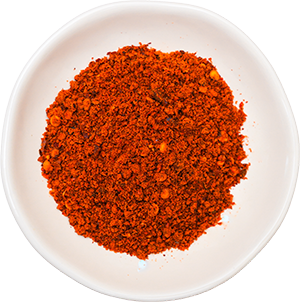
Coarse Chili Powder
Finely ground and free of impurities, with bright, uniform color. It colors and infuses flavor easily, making it suitable for Sichuan stir-frying, braised foods, and deep food processing.
Product Information: Shelf life: 12 months
Net content:
Household packs: 100g, 200g, 400g
Foodservice packs: 10 jin, 20 jin, 50 jin
When stir-frying or braising dishes, add it to the wok to release a red-oil aroma and spicy flavor, then add the ingredients and stir-fry. It enhances the spicy base flavor; avoid excessively high oil temperatures to prevent scorching and bitterness.
For cold vegetable or meat dishes, sprinkle in the chili powder after preparation and mix well; it can also be combined with salt, light soy sauce, and other seasonings to make a dressing.
Place an appropriate amount of chili powder in a container, gradually pour in boiling-hot refined vegetable oil while stirring to release its spicy aroma. After cooling, the resulting red chili oil can be used to season various dishes.
Used for cooking, cold dishes, homemade red chili oil, and more.
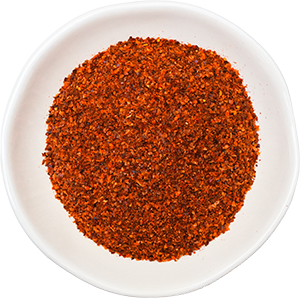
Chili Oil
Extracted using traditional methods, with a rich mellow aroma, bright and clear red color, a fragrant and spicy yet non-harsh flavor, and a long-lasting aroma. Ready to use upon opening, it is suitable for seasoning various dishes and for commercial bulk applications.
Product Information: Shelf life: 12 months
Net content:
Household packs: 200 milliliters, 380 milliliters,
Foodservice packs: 10 jin, 25 jin
For cold meat and vegetable dishes, add red chili oil directly and mix with salt, light soy sauce, and other seasonings for enhanced color and aroma.
When stir-frying or braising dishes, add the red chili oil to release its aroma before adding the ingredients. It gives dishes a bright red color and a spicy base flavor; avoid prolonged high-temperature stir-frying to prevent scorching and bitterness.
Add it to the marinade during braising to enhance the spicy base flavor; after the braised food is cooked, mix in red chili oil to brighten and enrich the taste.
Used for hot pot, cold dishes, cooked dishes, and more.

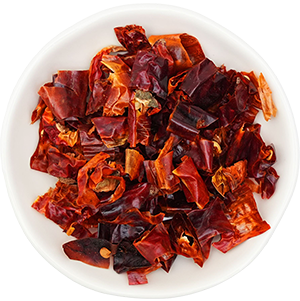
Chili Pepper Pieces
Made from carefully selected high-quality chili peppers, cut into uniform pieces with full dried flesh, little breakage, and good cooking resistance. Mainly used to enhance aroma and spiciness, suitable for stir-frying, dry-pot dishes, and sauce preparation.
Shelf life: 12 months
Net content:
Household packs: 100 g, 200 g, 400 g
Foodservice packs: 10 jin, 25 jin, 50 jin
Add the chili pepper pieces when the oil reaches approximately 60% heat, stir-fry briefly to release their aroma and spiciness, then add the ingredients. Do not cook for too long to avoid scorching and bitterness; suitable for Sichuan stir-fried and braised dishes.
Fry the chili pepper pieces at a moderate oil temperature until slightly crisp to make dry-fried dishes or spicy crisps. Combine with ingredients after frying for a fragrant, spicy and crispy texture; control the oil temperature to prevent darkening.
Add chili pepper pieces when simmering hot-pot or chuan chuan xiang soup bases to release their spicy aroma and color and enhance the flavor of the broth.
Used for hot pot, cooked dishes, stir-frying, high-heat stir-frying, and more.
Fine Chili Powder
Finely ground and free of impurities, with bright, uniform color. It colors and infuses flavor easily, making it suitable for Sichuan stir-frying, braised foods, and deep food processing.
Shelf life: 12 months
Net content:
Household packs: 100g, 200g, 400g
Foodservice packs: 10 jin, 20 jin, 50 jin
Its fine texture colors food easily. It can be used as a dry powder seasoning or cooked into red chili oil for use in spicy snack seasoning, allowing the heat to penetrate evenly.
Place the fine chili powder in a heat-resistant container and pour hot oil over it in several batches while stirring to release a fragrant, bright-red chili oil. Allow it to cool before use.
Used for spicy snack strips, homemade red chili oil, and more.
WeChat Channels

Douyin Short Videos