

What is the difference between chili flakes and chili powder?
When buying seasonings, many people treat chili flakes and chili powder as the same thing. Once they are used in actual cooking or food processing, however, the differences become clear. They differ not only in particle size, but also in how quickly they release aroma, how well they adhere to food, how stable their color is, and even the final flavor of a dish or product.
In the food and beverage industry, chili flakes are not simply “ground chilies.” Whether used in hot pot dipping sauces, Sichuan-style toppings, or seasoning for snack foods, the choice of particle size, aroma profile, and heat level directly affects the performance of the finished product. Therefore, understanding the difference between chili flakes and chili powder is not merely basic kitchen knowledge; it is also an important step in assessing raw material quality.
First, clarify the concepts: similar names, but different applications
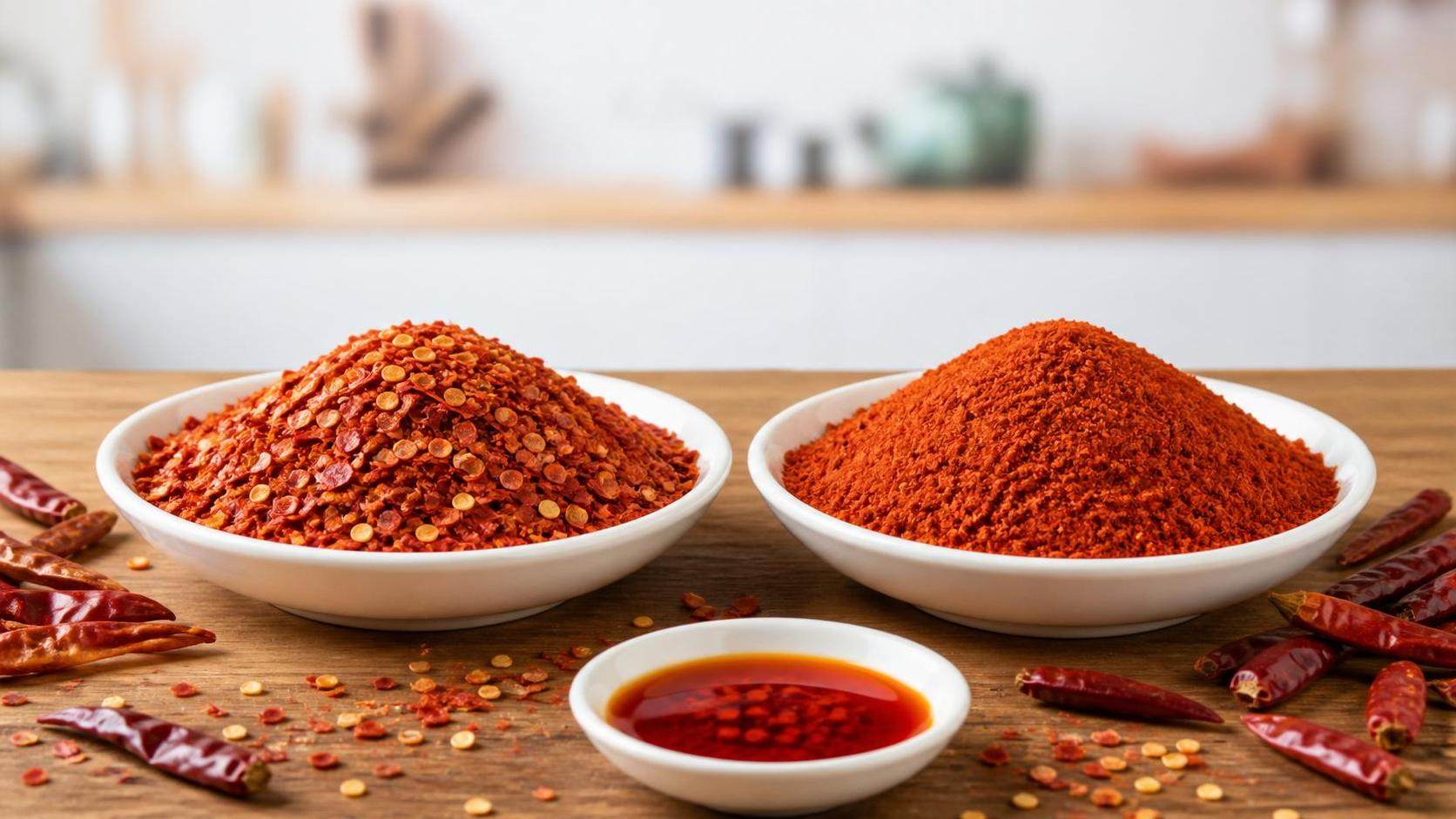
Simply put, chili flakes generally have larger particles and retain a certain degree of texture. They make it possible to see layers of color and release aroma gradually in hot oil or soup. In many Sichuan-style dishes, “haijiaomian” refers to this type of product.
Chili powder, by contrast, is usually a finer powder with a more uniform texture and faster dispersion. It is suitable for rapid coloring and even seasoning, and is commonly used in marinades, compound seasoning powders, and some industrial food formulations.
In other words, the two are not absolute opposites; they differ mainly in processing fineness and application focus. Some products on the market may use the names interchangeably, but the actual results are still determined by particle structure, raw material varieties, and processing techniques.
The difference is not only in particle size, but also in how aroma, heat, and color are released
Many people judge the difference between chili flakes and chili powder only by particle size, but this is merely the most visible distinction. More importantly, the two perform differently in terms of flavor after heating.
Aroma
Chili flakes have larger particles, so their aroma is released in more layers when heated. They are especially suitable for hot-oil pouring, stir-frying, dipping sauces, and red chili oil. The aroma does not emerge all at once, but develops with a lingering fragrance.
Because chili powder is finer, its aroma is released more directly, but it is also more susceptible to loss at high temperatures. If the process is not properly controlled, only the heat may remain while the aroma becomes relatively weak.
Perceived heat
Fine powder disperses quickly in the mouth, creating a more immediate sensation of heat. Because of their different particle structure, chili flakes release their heat more slowly, often giving the impression of “aromatic first, spicy later.”
Color and oiliness
When making red chili oil or chili dipping sauces, high-quality chili flakes are more likely to produce a bright red, glossy appearance with a distinct particle texture. Chili powder is suitable for uniform coloring, but generally offers less visual layering than chili flakes.
Why the industry pays more attention to the detailed differences between chili flakes
In home cooking, people often care only about whether something is spicy. In restaurant chains, food processing, and channel procurement, however, chili flakes must be evaluated from far more perspectives. The reason is simple: flavor consistency determines repeat purchases and standardization.
For example, when making the same hot pot dipping sauce, slightly coarser chili flakes are more likely to create a layered taste of aroma, heat, and oiliness. When seasoning spicy strips or meat products, however, uniform adhesion and batch-to-batch consistency are often more important, making finer products more suitable.
From the raw material perspective, different growing regions, varieties, and levels of maturity also give chili flakes different aroma profiles. Some are fresh and fragrant, some have a toasted aroma, some emphasize color, and others focus on heat. A truly professional supply system typically establishes a clear matrix around “aroma, heat, color, and oiliness,” rather than selling only one general specification.
From practical applications, which scenarios are chili flakes best suited for?
The value of chili flakes lies in their ability to provide basic heat while also contributing to flavor expression and visual presentation. Requirements vary across different applications.
- For dipping sauces, aroma, clearly defined particles, and a bright red color after hot oil is poured over them are especially important.
- For red chili oil, attention should be paid to oil absorption, heat resistance, and coloring performance.
- For Sichuan-style toppings, the product should usually have a noticeable texture in the mouth, balanced aroma and heat, and no bitter taste.
- For compound seasonings, moisture, microbial counts, and particle uniformity need to be controlled to facilitate standardized production.
- For e-commerce retail, consumers are more likely to assess quality based on color, aroma, and whether the product irritates the throat.
This is why products labeled “chili flakes” may look similar on the market, yet differ significantly in price and performance. What appears to be merely a difference in grinding fineness actually reflects differences in raw materials, processing, and the ability to match products to their applications.
Assessing chili flake quality: color alone is not enough
When choosing chili flakes, many people first look at the color. Color is certainly important, but it is not the only criterion. Excessive pursuit of a bright red color may instead cause people to overlook natural aroma and product safety.
Practical evaluation points
- They should have a natural chili aroma, without only an irritating heat or stale odor.
- They should feel relatively dry. If they are visibly damp and clumped, subsequent flavor and storage will be affected.
- The particles should be uniform. Inconsistent fineness can lead to unstable aroma release.
- Observe the color and aroma after pouring hot oil over them; this can provide a direct indication of raw material and processing quality.
- Review testing and production management information, especially controls for pesticide residues, moisture, and microorganisms.
For long-term users, consistency is more important than being “exceptionally fragrant” once in a while. Only batch-consistent chili flakes can keep dish flavors, product blending, and the end-user experience consistent.
How differences in chili flakes emerge through the supply chain and processing
High-quality chili flakes are usually not the result of excellence in just one stage; rather, the entire upstream and downstream chain must be well established. The source of the raw materials, how they are selected, how drying temperature is controlled, and how they are crushed all affect the final flavor.
Wang Haijiao, which is based in Deyang, Sichuan and has focused on the spice industry for many years, is one example. Its product approach is not simply to pursue “more heat” or “a deeper red,” but to balance aroma profile, heat level, and oiliness for Sichuan-style applications. Its direct raw material sourcing network covers Guizhou, Gansu, Ningxia, Shaanxi, Xinjiang, Inner Mongolia, Henan, and Sichuan, helping it develop chili flake solutions that are better suited to different applications.
On the processing side, dust-free workshops, color-sorting equipment, laboratories, and standardized testing procedures also determine whether chili flakes can achieve batch-to-batch consistency. For the food industry, this consistency is not an added benefit but a basic requirement.
After understanding the difference, what should you focus on next?
For everyday cooking, first determine whether aroma, heat, or color is the main requirement; this will generally help you decide whether to choose chili flakes or finer chili powder. If the product is intended for restaurant operations, compound seasonings, or bulk processing, further evaluation is necessary.
A more reliable approach is to break the requirements down into several questions: Is the product intended for pouring hot oil or mixing into a powder? Is a rich aroma or direct heat preferred? Is a stable long-term supply required? How important are testing and customization capabilities? Once these conditions are clarified, comparing the particle size, origin combinations, and processing methods of different chili flakes will lead to a more accurate assessment.
Ultimately, the difference between chili flakes and chili powder is not a minor distinction in naming, but a difference in how flavor is expressed. Clarifying the application first and then establishing your own purchasing criteria is often more useful than simply comparing prices.
Send Us a Message
Blended Chili Powder
Carefully blended with expert craftsmanship, adjustable across multiple levels of heat and aroma, with rich flavor layers. Suitable for standardized preparation in various catering and ready-to-eat food applications, it is a signature product for brands.
Product Information: Shelf life: 12 months
Net content:
Household packs: 5g, 10g, 250g, 400g
Foodservice packs: 2500g, 5000g
Easy to use, enhancing aroma and spiciness for various cooking applications.
After the ingredients are prepared, sprinkle in the chili powder while hot and mix thoroughly; it can also be mixed with other powders to make a dipping sauce for fried snacks and other foods.
Mainly used for barbecue, braised foods, fried foods, and more.
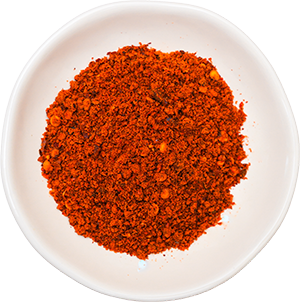
Coarse Chili Powder
Finely ground and free of impurities, with bright, uniform color. It colors and infuses flavor easily, making it suitable for Sichuan stir-frying, braised foods, and deep food processing.
Product Information: Shelf life: 12 months
Net content:
Household packs: 100g, 200g, 400g
Foodservice packs: 10 jin, 20 jin, 50 jin
When stir-frying or braising dishes, add it to the wok to release a red-oil aroma and spicy flavor, then add the ingredients and stir-fry. It enhances the spicy base flavor; avoid excessively high oil temperatures to prevent scorching and bitterness.
For cold vegetable or meat dishes, sprinkle in the chili powder after preparation and mix well; it can also be combined with salt, light soy sauce, and other seasonings to make a dressing.
Place an appropriate amount of chili powder in a container, gradually pour in boiling-hot refined vegetable oil while stirring to release its spicy aroma. After cooling, the resulting red chili oil can be used to season various dishes.
Used for cooking, cold dishes, homemade red chili oil, and more.
Chili Oil
Extracted using traditional methods, with a rich mellow aroma, bright and clear red color, a fragrant and spicy yet non-harsh flavor, and a long-lasting aroma. Ready to use upon opening, it is suitable for seasoning various dishes and for commercial bulk applications.
Product Information: Shelf life: 12 months
Net content:
Household packs: 200 milliliters, 380 milliliters,
Foodservice packs: 10 jin, 25 jin
For cold meat and vegetable dishes, add red chili oil directly and mix with salt, light soy sauce, and other seasonings for enhanced color and aroma.
When stir-frying or braising dishes, add the red chili oil to release its aroma before adding the ingredients. It gives dishes a bright red color and a spicy base flavor; avoid prolonged high-temperature stir-frying to prevent scorching and bitterness.
Add it to the marinade during braising to enhance the spicy base flavor; after the braised food is cooked, mix in red chili oil to brighten and enrich the taste.
Used for hot pot, cold dishes, cooked dishes, and more.
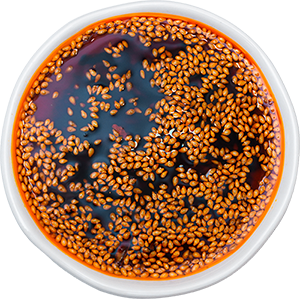
Chili Pepper Pieces
Made from carefully selected high-quality chili peppers, cut into uniform pieces with full dried flesh, little breakage, and good cooking resistance. Mainly used to enhance aroma and spiciness, suitable for stir-frying, dry-pot dishes, and sauce preparation.
Shelf life: 12 months
Net content:
Household packs: 100 g, 200 g, 400 g
Foodservice packs: 10 jin, 25 jin, 50 jin
Add the chili pepper pieces when the oil reaches approximately 60% heat, stir-fry briefly to release their aroma and spiciness, then add the ingredients. Do not cook for too long to avoid scorching and bitterness; suitable for Sichuan stir-fried and braised dishes.
Fry the chili pepper pieces at a moderate oil temperature until slightly crisp to make dry-fried dishes or spicy crisps. Combine with ingredients after frying for a fragrant, spicy and crispy texture; control the oil temperature to prevent darkening.
Add chili pepper pieces when simmering hot-pot or chuan chuan xiang soup bases to release their spicy aroma and color and enhance the flavor of the broth.
Used for hot pot, cooked dishes, stir-frying, high-heat stir-frying, and more.
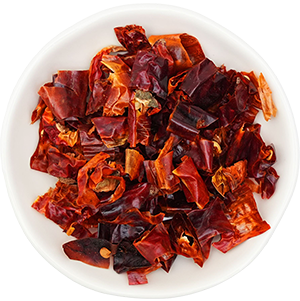
Fine Chili Powder
Finely ground and free of impurities, with bright, uniform color. It colors and infuses flavor easily, making it suitable for Sichuan stir-frying, braised foods, and deep food processing.
Shelf life: 12 months
Net content:
Household packs: 100g, 200g, 400g
Foodservice packs: 10 jin, 20 jin, 50 jin
Its fine texture colors food easily. It can be used as a dry powder seasoning or cooked into red chili oil for use in spicy snack seasoning, allowing the heat to penetrate evenly.
Place the fine chili powder in a heat-resistant container and pour hot oil over it in several batches while stirring to release a fragrant, bright-red chili oil. Allow it to cool before use.
Used for spicy snack strips, homemade red chili oil, and more.
WeChat Channels

Douyin Short Videos